
The Complete Guide to Care Instructions on Furniture & Stuffed Goods Labels: What Manufacturers Need to Know
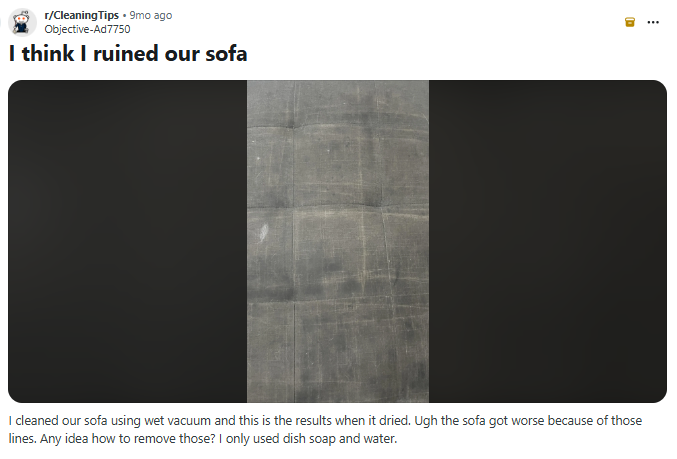
Picture this: A customer buys your bestselling upholstered sofa, spots a stain a few months in, and reaches for the nearest cleaning spray. There are no instructions on the label, so how bad could it be?
An hour later, the fabric is discolored, the cushion filling is waterlogged, and they're filing a complaint and leaving a review that'll live on the internet forever.
You could add two lines of text on your label and never have to worry about this!
Scenarios like this are more common than manufacturers like to admit. Care and cleaning instructions on furniture and stuffed goods law labels are a courtesy to consumers, a liability shield, and - depending on the state - a compliance requirement.
Whether you're producing upholstered sofas, accent chairs, throw pillows, or stuffed toys, here's what you need to know about including proper care instructions on your law labels.
Why You Should Put Care Instructions Labels On Your Stuffed Items
Furniture and stuffed goods are required by law to carry a law label disclosing their filling materials. But care instructions serve a different function: they tell the consumer how to clean and maintain the product without damaging it.
When care information is vague, missing, or wrong, the consequences land squarely on your brand. Damaged upholstery, ruined fillings, and voided warranties are all downstream effects of inadequate care guidance. And in states like California, care labeling requirements for certain textile products go beyond the federal baseline, something worth reviewing before you finalize your label copy.
What Care Instructions Should Cover
For upholstered furniture and stuffed goods, care instructions should address every cleaning method a consumer might reasonably attempt and flag anything that would cause damage.
In practice, that means that every label should address:
Cleaning Method
Can the item be spot cleaned? Hand washed? Machine washed (for removable covers)? The label should state the appropriate method clearly. If certain methods — saturating the fabric, steam cleaning, machine washing the entire piece — would cause damage, that needs to be disclosed explicitly. "Spot clean only" and "Do not saturate" are both examples of instructions that protect the consumer and your product.
Temperature
For any cleaning method that involves water or heat, temperature matters. A fabric that holds up fine under cool water may shrink, bleed, or distort with warm or hot water. If your upholstery fabric has temperature sensitivities, say so.
Drying
Furniture and stuffed goods have filling materials that react very differently to heat and moisture than apparel does. Down, polyester fiberfill, foam, and natural fibers each have their own drying requirements. If a cushion cover can go in the dryer, specify the heat setting. If it must be air dried — or if the filling must never get wet at all — that's critical information for the consumer.
Ironing
For removable textile covers, ironing guidance may be relevant. If the fabric can be ironed, indicate the appropriate temperature. If ironing would damage the material (common with certain synthetic upholstery fabrics), that warning belongs on the label.
Warnings
This is where many manufacturers underinvest. Any cleaning process that would harm the product — bleach, steam, dry cleaning solvents, excessive moisture — needs to be explicitly called out. Don't assume consumers will intuitively know what not to do. If it can go wrong, say so.
Dry Cleaning: Be Specific About What's Safe
If your product or its removable components can be dry cleaned, a simple "Dryclean" statement may be sufficient. But if any part of the dry cleaning process would damage the item — for example, if steam pressing would distort cushion structure, or if certain solvents would affect the fabric or filling — that limitation must be disclosed.
This is especially relevant for upholstered goods with structured forms, specialty fabrics, or mixed-material constructions. A blanket "Dryclean" instruction on a product that can't withstand steam is an incomplete label and a potential liability if the consumer follows the instruction in good faith and the product is damaged.
Products with Multiple Components: Label Each One
Many furniture and stuffed goods have components with different care requirements — a sofa with removable cushion covers, a decorative pillow with an embellished outer shell and a separate insert, or a stuffed toy with surface-applied details that can't get wet.
Best practice is to disclose care instructions for each component separately when they differ. A single label that says "Machine wash cold" when that instruction only applies to the cover — not the insert — is setting consumers up for a mistake. The goal of care information is to give the consumer everything they need to properly clean the item without causing damage or reducing its lifespan.
This is a nuanced area, and one where it pays to think carefully about how your label is written. For guidance on handling multi-component products more broadly, check out our article on labeling products with removable components.
Using Care Symbols: Know Which Standard Applies
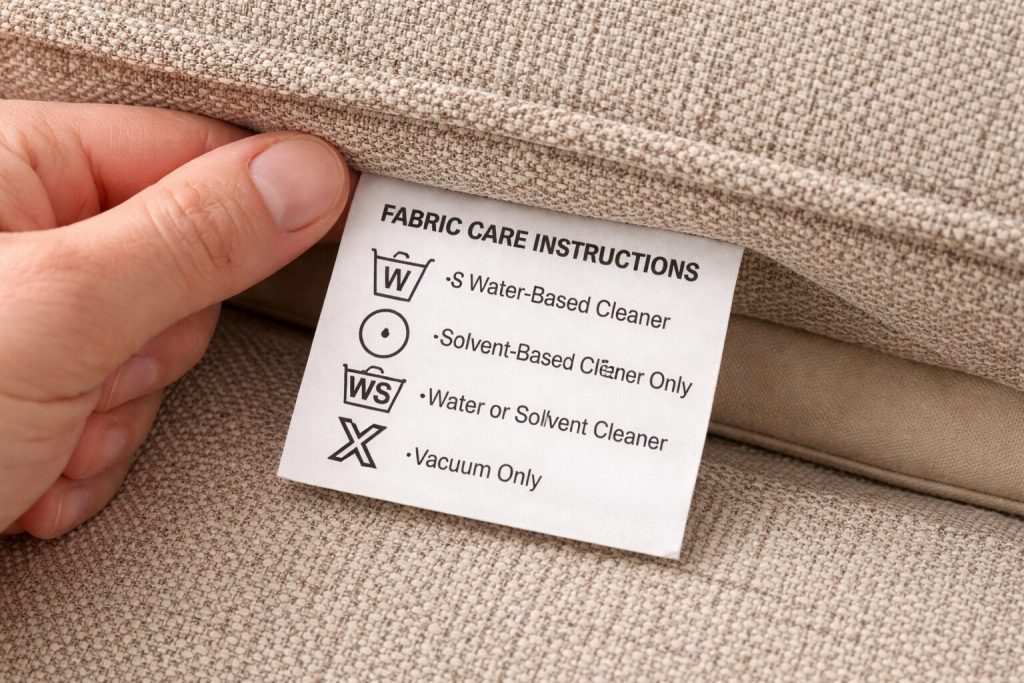
If you prefer to use care symbols rather than written instructions, make sure you're working from the right standard. In the U.S., the permitted standard for care symbols on textile products is ASTM Standard D5489-96c. Non-standard or internationally-sourced symbols may not satisfy U.S. requirements, and using them inconsistently across a product line creates its own compliance headaches.
If your products are sold in multiple countries, be aware that U.S. care symbols differ from the ISO symbols used in many international markets. Get clear on which standard applies where, and make sure your label reflects it.
Don't Forget California
If you sell furniture or stuffed goods into the California market — and most manufacturers do — California has additional labeling requirements layered on top of federal standards. The state has historically been more prescriptive about product labeling across multiple categories, and textiles and upholstered goods are no exception.
It's also worth knowing that California's Proposition 65 warning requirements can apply to furniture products depending on the materials used in their construction.
Get Your Labels Right Before They Go to Print
Care instructions are one of those label elements that are easy to underestimate, until a consumer damages a product and you're explaining why the label didn't warn them. The good news is that getting this right isn't complicated when you know what to include.
Accurate, specific, product-tested care instructions protect your customers and your brand. Vague or missing instructions do the opposite.
If you're building out labels for a new furniture or stuffed goods line, updating existing labels, or want a professional eye on your current compliance posture, we’d love to help! From law label design and printing to compliance audits and hands-on consulting, we work with manufacturers every day to make sure their labels say exactly what they need to say — no more, no less.
Stay up-to-date with American Law Label
"*" indicates required fields


