
What’s A TB-117 Label? Flammability Rules Every Furniture Brand Should Know
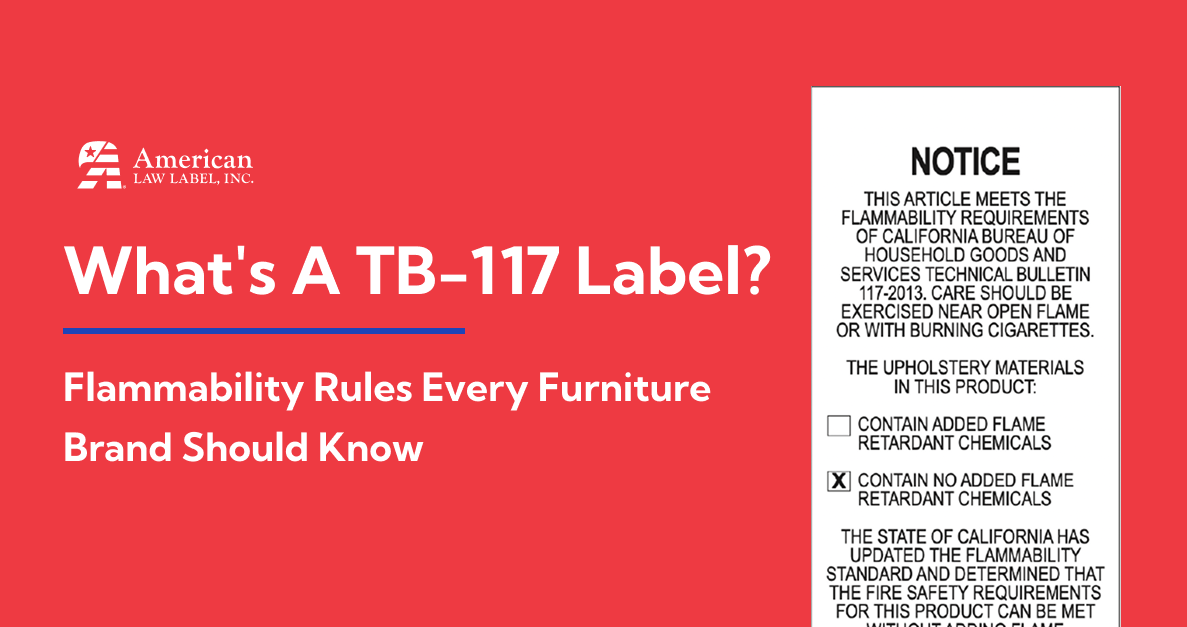
If you make or import upholstered furniture, you’ve probably heard someone say, “Don’t forget the TB-117 label!”

They’re not being dramatic.
California’s Technical Bulletin 117-2013 (TB-117-2013) began as a state-level flammability standard, but it now serves as the foundation of U.S. residential upholstered furniture flammability requirements. If the label is wrong—or missing—your products can be delayed at port, pulled from retail floors, or flagged by state investigators.
Today, we’re breaking down what TB-117 is, which products it applies to (and which it doesn’t), what must appear on your TB-117 label, and how the required CPSC federal flammability statement fits into the compliance picture.
Why TB-117 Exists and Why It’s So Strict
TB-117 is California’s smolder-resistance standard for residential upholstered furniture. It sets performance requirements for cover fabrics, filling materials, barrier materials, and decking materials sold in the state. Since January 1, 2015, every piece of upholstered furniture product sold in California must comply with the test method and carry the appropriate flammability label. The federal government later adopted TB-117-2013 through 16 CFR part 1640, making it the national flammability standard for upholstered furniture.
Why the urgency? Research has consistently shown that upholstered furniture fires are low-frequency but high-fatality events. Fires in which residential upholstered furniture (RUF) was the first item ignited accounted for 16% of US residential fire deaths. TB-117-2013 addresses this risk by requiring smolder-resistant materials and clear labeling so manufacturers, inspectors, and consumers know how a piece of furniture is built.
Who Must Use TB-117 Labels? Understanding Coverage and Exemptions
TB-117-2013 applies to residential upholstered furniture sold in California: sofas, chairs, upholstered headboards, ottomans, and similar products designed for sitting or lounging. These items must meet the smolder resistance requirements and carry the proper TB-117 label.
But not all products fall under TB-117. California lists several important exemptions, and this is one place manufacturers often make mistakes.
TB-117-Exempt Items
- Bedding products such as mattresses, mattress pads, comforters, decorative pillows, and bed pillows
- Cushions and pads intended solely for outdoor use
- Articles with ½ inch or less of filling material and no horizontal surface meeting a vertical surface
- Certain children’s products such as bassinets, car seats, changing pads, highchair pads, infant carriers, walkers, playpen side pads, strollers, and similar items
- Medically prescribed or therapeutic upholstered items made for a named individual
- Upholstered furniture used strictly in motorized RVs (but not towables, trailers, or campers)
- Furniture used exclusively for fitness and exercise
If you sell across multiple product categories—mattresses, pillows, and furniture—these distinctions matter. Here’s a refresher on mattress flammability labeling!
TB-117 Label Requirements: Size, Permanence, and Chemical Disclosures

If your furniture falls under TB-117, the label must meet specific requirements. The flammability label must be at least 2 × 3 inches, permanently attached, and made of a material that won’t tear or deface easily.
The Flame Retardant Statement (SB 1019)
TB-117 labels must also disclose whether flame retardant (FR) chemicals were added to the product. Manufacturers must place an “X” in one of two checkboxes indicating FR was added or no FR was added.
This requirement is rooted in research on flame retardant exposure. Studies show fire retardant chemicals can migrate into household dust, creating potential health risks—especially for children. At the same time, newer research has explored how barrier technologies and construction methods can increase smolder resistance without relying heavily on FR additives, making the statement even more relevant for consumers and regulators.
Why You Should Never Over-Label
If you add a TB-117 label to a product that isn’t covered—such as a decorative pillow—California investigators are still authorized to inspect the label. If the wording or structure is incorrect, they can issue violations even though the product is exempt.
In other words: never add a TB-117 label “just in case.”
The CPSC Certification Statement: A Federal Requirement on Upholstered Furniture
When California’s TB-117-2013 became the federal standard, the CPSC added its own labeling rule. Under 16 CFR 1640.4, any item of upholstered furniture covered by TB-117-2013 must also include the following statement on a permanent label:
“Complies with U.S. CPSC requirements for upholstered furniture flammability.”
The certification label must have a white background, black text, a black border, and appear on the front of the tag in English.
Because furniture already carries law labels like TB-117 labels, and sometimes Prop 65 or TSCA statements, many brands use a combined product label to consolidate required language into one clean format.
How to Avoid Common TB-117 Mistakes
TB-117-2013 and the CPSC certification statement aren’t optional, they’re core compliance requirements for any upholstered furniture sold in the U.S. Getting them wrong can delay shipments, trigger state violations, or cause retailers to refuse your product.
TB-117 Compliance Checklist for Furniture Manufacturers
- Confirm which of your products fall under TB-117 and which are exempt
- Ensure TB-117 labels meet size, material, and attachment requirements
- Verify the flame retardant chemical statement is clear and accurate
- Include the mandatory CPSC certification statement on every covered item
- Avoid over-labeling exempt products such as decorative pillows or children’s items
- Review label materials to ensure long-term durability and state compliance
- Consider a combined product label if your products require multiple regulatory tags
If you want help reviewing or designing compliant TB-117 or CPSC flammability labels, we're always happy to assist. A quick audit now can prevent expensive relabeling or enforcement issues later!
Stay up-to-date with American Law Label
"*" indicates required fields


